
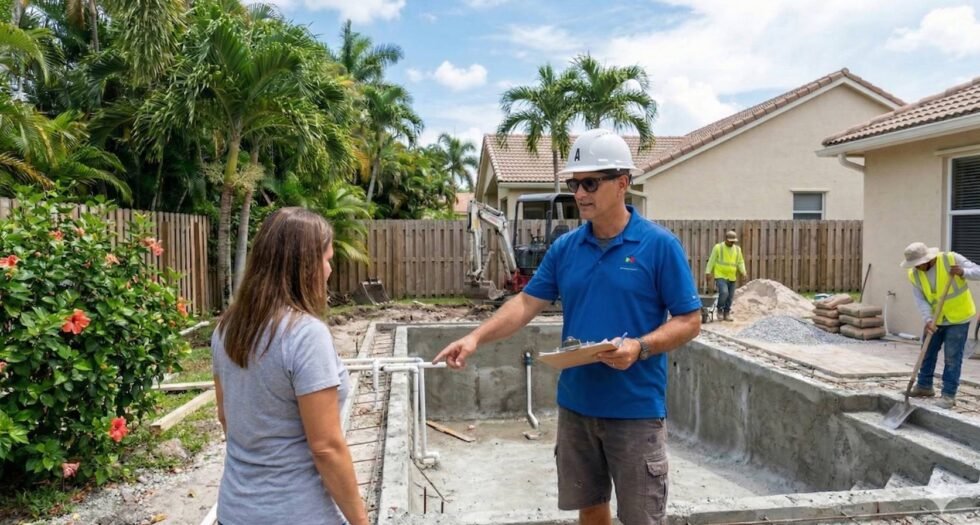
Building Your Dream Oasis: Requirements for a Pool Contractor in Pembroke Pines
So, you’ve decided to beat the Florida heat by installing a pool. Smart move! But before the first shovel hits the dirt, there is a sea of paperwork and local regulations to navigate. As a premier pool contractor in Pembroke Pines, we know that the permitting process can feel more exhausting than a lap in an Olympic-sized pool.
To help you get started, here is a breakdown of what the City of Pembroke Pines requires before construction can begin.
1. The Permit Package
In Pembroke Pines, pool construction is governed by the Building Department. You cannot simply start digging; you need an approved Building Permit. The application must typically include:
-
The Permit Application: Signed and notarized by both the homeowner and the contractor.
-
Proof of Ownership: A recorded Warranty Deed or a recent tax bill.
-
The Contract: A copy of the signed agreement between you and your pool contractor.
2. Engineering and Site Plans
The city needs to see exactly what is happening under the surface. Your contractor must provide:
-
Survey (2 copies): A recent boundary survey showing existing structures, setbacks, and easements.
-
Engineering Drawings: Detailed structural plans signed and sealed by a Florida-licensed Engineer or Architect. This includes the pool’s shell reinforcement, plumbing, and drainage.
-
Soil Test: Often required to ensure the ground can support the weight of the water and the concrete shell.
3. Strict Setback Requirements
Pembroke Pines has specific rules regarding where a pool can sit on your property. Generally, you must adhere to:
-
Rear and Side Setbacks: Most residential zones require the water’s edge to be at least 5 to 10 feet away from the property line.
-
Easements: You cannot build over utility easements (where water, power, or internet lines run).
4. Safety First: The Florida Residential Swimming Pool Safety Act
Safety isn’t just a suggestion; it’s the law. To pass your final inspection, your pool must have at least one of the following:
-
A Safety Fence: A minimum 4-foot high barrier surrounding the pool with self-closing, self-latching gates.
-
Alarms: High-decibel alarms on all doors and windows leading to the pool area.
-
Safety Covers: An approved power safety cover.
5. Electrical and Plumbing Inspections
Since water and electricity are a dangerous mix, the city requires rigorous inspections of your pool pump, lighting, and bonding. This ensures that all metal components are properly grounded to prevent electrical shocks.
[Call Us at (954) 934-3379 ] or [Click Here to Schedule Your Free Quote] and let’s get your project moving!